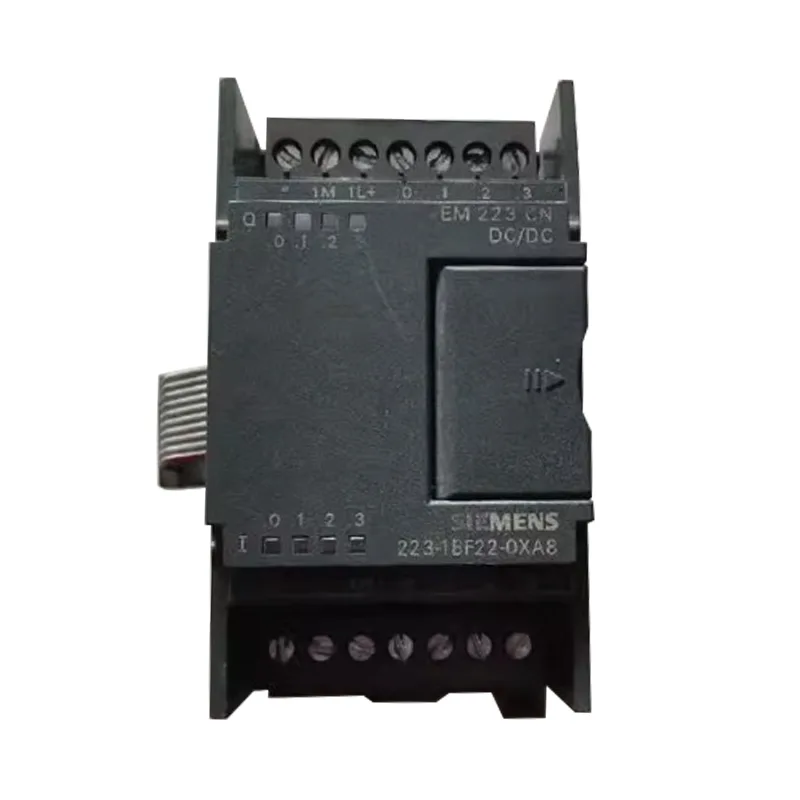
Choosing a control platform is rarely just about specifications on paper. For many buyers, the real question is whether a controller can keep equipment running without creating long troubleshooting cycles, expensive downtime, compatibility headaches, or sourcing risks. In practical factory environments, GE PLC solutions continue to attract attention because they are associated with stable operation, flexible architecture, proven industrial use, and long-term service value.
In this article, I focus on the real concerns buyers raise before purchase: how to judge reliability, how to avoid integration issues, how to balance cost and lifecycle value, and how to select the right partner for supply and support. I also explain where GE PLC is especially useful, what questions should be asked before ordering, and why a dependable supplier such as Quanzhou Xinyuan Technology Co., Ltd. can make the difference between a smooth project and an expensive delay.

Industrial buyers are not sentimental. They do not choose a controller because it has a familiar brand name alone. They choose it because production lines must run, alarms must be clear, communication must be stable, and replacement decisions must be realistic. That is exactly why GE PLC remains relevant. In many facilities, especially those with mature automation architecture or a mix of legacy and upgraded systems, buyers want a platform that is known for dependable industrial behavior rather than fashionable marketing language.
In actual procurement conversations, I often see the same pattern. A plant is expanding a line, replacing aging modules, modernizing an existing cabinet, or trying to standardize spare parts. The team does not want unnecessary disruption. They want a controller that can support equipment logic clearly, integrate into wider control systems, and reduce uncertainty during commissioning. That is where the perceived value of GE PLC becomes very practical.
Another reason buyers continue to search for this category is the need for architecture flexibility. Some projects need a compact control setup. Others need broader performance, more communication capability, or expansion potential for demanding environments. When a control family can serve multiple levels of complexity, it becomes easier for engineers and purchasing teams to plan with confidence instead of constantly switching ecosystems.
Most buyers are not asking, “What controller sounds advanced?” They are asking, “What will stop my line from failing, my project from slipping, or my maintenance team from suffering?” A well-matched GE PLC can help address several common pain points.
| Buyer Pain Point | Why It Matters | How GE PLC Helps |
|---|---|---|
| Unexpected downtime | Production interruptions quickly become cost problems | Stable control performance and proven use in industrial environments support reliable operation |
| Hard-to-manage upgrades | Replacing a control platform can disrupt wiring, programming, and schedules | A familiar and structured platform can simplify replacement planning and staged upgrades |
| Compatibility concerns | Mixed systems often need communication with multiple devices and networks | Appropriate model selection can support broader integration and expansion strategies |
| Spare part uncertainty | Delayed parts can keep machines idle longer than expected | Working with a stocked supplier improves sourcing speed and continuity |
| Weak technical support | Even the right hardware can become a problem without guidance | Supplier-side assistance before and after sale reduces decision and maintenance pressure |
One point buyers often underestimate is the cost of hesitation. It is not only breakdowns that create losses. Slow diagnosis, uncertain replacements, unclear model matching, and weak documentation can drain time from engineering teams. A good control solution should reduce friction, not add to it.
That is why sourcing matters almost as much as hardware selection. If the supplier understands industrial automation, responds quickly, and can help narrow down model options, the buyer saves time at the earliest and most sensitive stage of the project.
A strong purchase decision usually comes from asking the right operational questions. I would not evaluate GE PLC on brand alone. I would evaluate it according to the control task, the environment, the system structure, and the support path after installation.
Buyers also benefit from comparing controller selection through the lens of risk rather than only features. Sometimes a lower unit price hides a higher operational cost if installation becomes harder, spare parts are harder to source, or support is too weak when problems appear. In contrast, a control platform with stable field performance and a dependable supply path can create much better project economics over time.
| Evaluation Factor | Questions to Ask | Why It Affects Purchasing |
|---|---|---|
| Performance fit | Does the controller match the machine’s logic and response requirements? | A mismatch can lead to overbuying or underperformance |
| System compatibility | Will it work smoothly with the current automation structure? | Integration issues create delays and hidden labor cost |
| Supply continuity | Can the supplier provide stock and model guidance quickly? | Fast supply supports maintenance and project schedules |
| Technical response | Will support be available before and after the order? | Good support lowers commissioning and troubleshooting pressure |
| Lifecycle value | Will the product remain practical over years of service? | Long-term value matters more than a narrow initial saving |
The answer depends on the kind of control environment you are dealing with. In many cases, GE PLC is considered for industrial equipment where dependable logic execution, system stability, and maintainable control structure matter more than flashy complexity.
Typical application areas may include manufacturing lines, packaging systems, material handling, utility-related control panels, process-oriented machine sections, and equipment that must run in demanding industrial surroundings. For buyers with existing installations, there is also a strong maintenance-driven demand. They may need replacement units, additional modules, or structured expansion without redesigning the entire control philosophy.
This is one reason buyers pay attention to supply channels connected with established model families. If a supplier can support commonly sought configurations and related modules, the project becomes easier to plan. It reduces the chaos of searching multiple sources, waiting for incomplete quotes, or discovering too late that the intended part is unavailable.
I have seen buyers create avoidable problems by treating control hardware as a simple catalog purchase. In reality, a poor decision at the selection stage often multiplies cost later.
Good buyers usually think beyond the first order. They ask what happens six months later, during expansion, during breakdown, during inventory review, or during an urgent shutdown recovery. That mindset leads to better controller choices and better supplier relationships.
The supplier is not a side issue. In many projects, the supplier determines whether the purchase process feels controlled or chaotic. With industrial automation products, that difference is enormous. A dependable source for GE PLC can reduce delays, improve model accuracy, support communication between purchasing and engineering, and shorten the distance between inquiry and deployment.
Quanzhou Xinyuan Technology Co., Ltd. matters in this context because buyers often need more than a catalog listing. They need practical help with model selection, product availability, response speed, and service coordination. When a supplier can provide a one-stop communication process and support both pre-sale and after-sale needs, the buyer’s workload becomes lighter and the project becomes less vulnerable to mistakes.
In my view, the best supplier relationship is one that prevents problems before they become visible. That means answering clearly, checking details carefully, and helping the customer move with confidence instead of guesswork.

This is where many smart buyers separate themselves from rushed buyers. A controller should not be judged only by purchase price. It should be judged by the cost of ownership across operation, maintenance, downtime exposure, replacement availability, and engineering efficiency.
If a control platform helps a factory run steadily, reduces troubleshooting confusion, and supports future changes more smoothly, that platform often delivers stronger financial value over time. The difference may not be obvious in the first invoice, but it becomes obvious in the plant.
That is one reason GE PLC continues to be considered seriously. Buyers want dependability they can work with. They want a system that supports long-term operation and a supplier relationship that gives them confidence when it is time to expand, replace, or maintain. In industrial purchasing, that kind of continuity is not a luxury. It is part of responsible decision-making.
Is GE PLC suitable for both new projects and replacement needs?
Yes. It can be considered for new equipment control plans as well as for modernization, spare sourcing, and replacement projects where continuity matters.
What should I prepare before requesting a quotation?
It is best to confirm the required model number, application type, I/O expectations, communication needs, and urgency of delivery. The clearer the requirement, the faster the supplier can respond accurately.
Why is supplier support so important for industrial controllers?
Because a controller purchase does not end with payment. Selection, installation, replacement, and maintenance all depend on reliable communication and support.
Can a lower-priced alternative always replace GE PLC?
Not necessarily. A controller may look similar in specification, but differences in compatibility, field reliability, support, and long-term sourcing can create much higher risk.
How can I reduce procurement risk for critical equipment?
Work with a supplier that understands industrial automation, confirms model fit carefully, and can support continuity through stock, communication, and after-sales service.
The real value of GE PLC is not just that it is a recognized control platform. Its value comes from how it helps buyers reduce downtime risk, maintain control stability, support equipment continuity, and make better long-term decisions. When those goals are paired with responsive sourcing and practical technical support, purchasing becomes far more efficient.
If you are comparing models, planning a system upgrade, or searching for a dependable supply channel, Quanzhou Xinyuan Technology Co., Ltd. is ready to support your project with responsive service and product coordination. If you want to move forward with confidence, reduce sourcing uncertainty, and find the right GE PLC solution for your application, please contact us today for product details, availability, and professional assistance.
Need a reliable source for GE PLC products and related industrial automation support? Reach out to Quanzhou Xinyuan Technology Co., Ltd. and contact us for model confirmation, availability checks, and a purchasing solution that fits your project instead of complicating it.